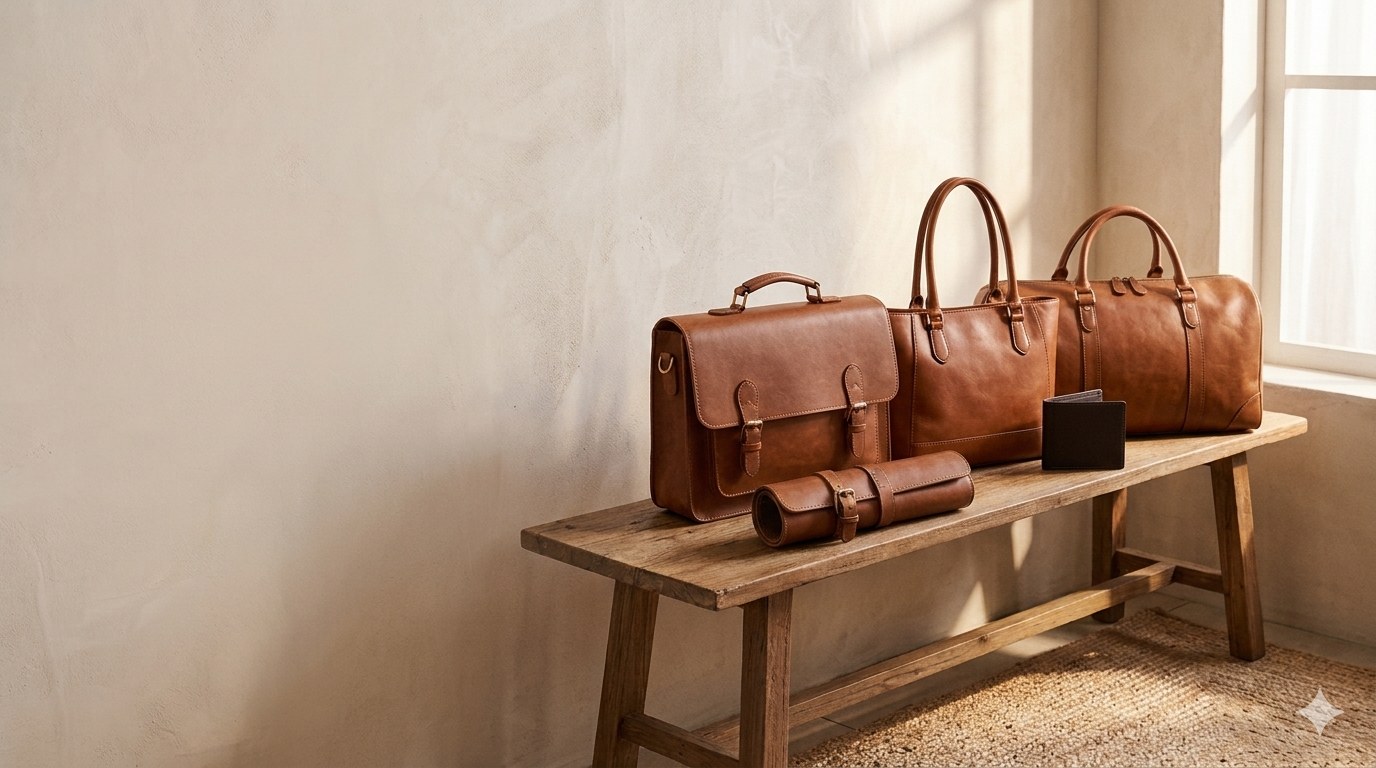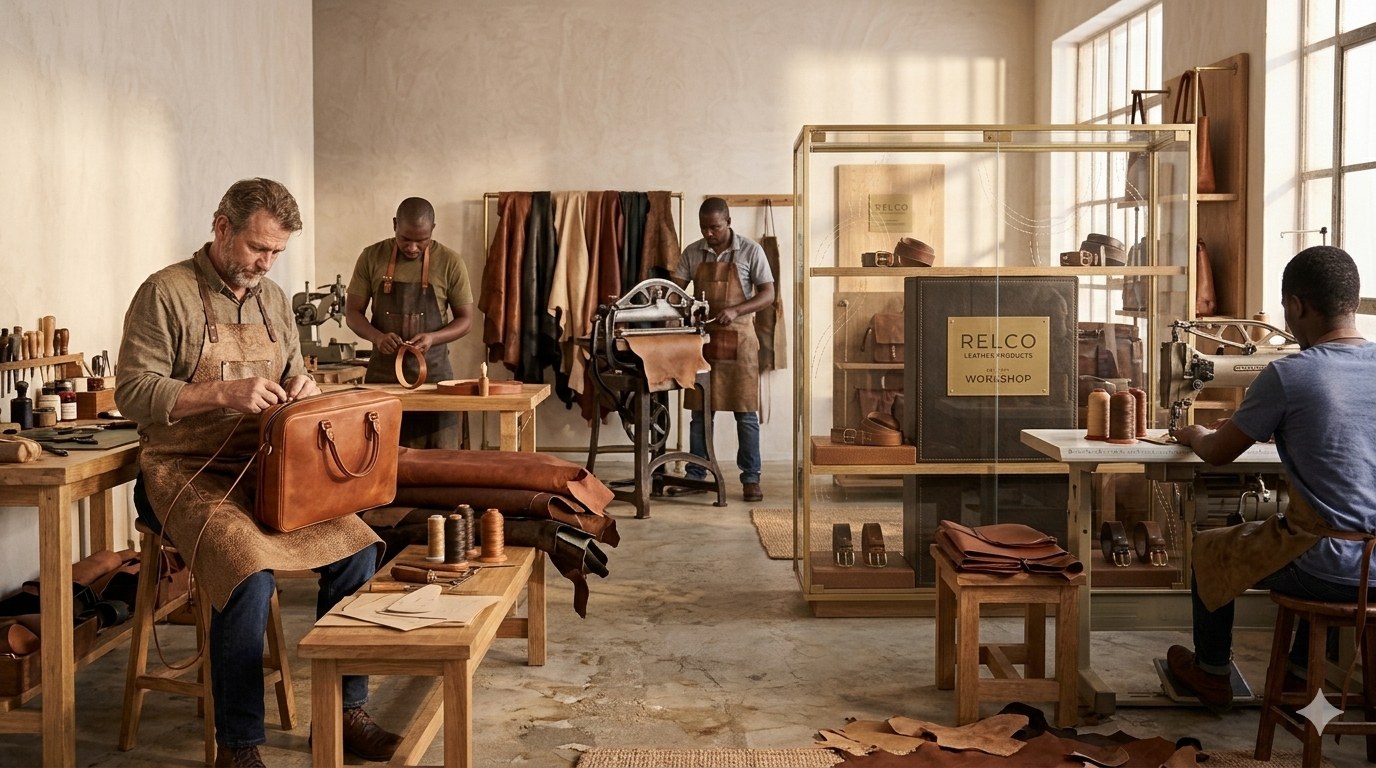
People often ask what makes one leather wallet better than another when both are cut from the same kind of hide. The answer is rarely the leather alone. It is the decisions around it: how the pattern is cut, how the edges are finished, what thread is used, and how much time the maker is given.
Cutting
A hide is not uniform. The fibre is tightest along the spine and looser near the belly. A good pattern places the parts that flex most, the fold of a wallet or the strap of a bag, on the tightest section. A cheaper approach cuts for yield, and the difference shows up later as stretch and sag.
The hide does not care about your pattern. The pattern has to care about the hide.
Skiving and folding
Skiving is the thinning of leather at a fold. Done well, it lets a wallet close flat without a bulge. Done badly, it leaves a weak line that cracks first. Most of the work in a wallet happens before a single stitch is sewn.
Edges
An edge can be painted, folded, or burnished. Paint is fast and uniform; it also chips. A burnished edge is sanded, dampened and rubbed until the fibres bind, then waxed. It takes several passes and it ages with the piece instead of peeling away from it. On every piece in this collection, the edges are burnished by hand.
Thread and stitch
We use waxed polyester thread, stitched at a consistent tension. A lock stitch is standard; a saddle stitch is stronger and slower. Either is fine if the tension is right. The failure mode is a stitch pulled too tight, which cuts the leather like a wire, or too loose, which leaves a gap for dirt.
Hardware
Zips, rings and buckles are the parts most likely to fail first. Solid brass costs more and can be repaired. Plated hardware looks the same on day one and does not on day five hundred. We choose solid brass where the piece allows it, and we keep the specification so a replacement can be sourced.
Why small runs
A small run lets the maker stop and check the piece in the hand, not just on the bench. It also makes it possible to change a pattern when something is not working, instead of repeating the same mistake for a season. The cost is higher. The result is a piece that can be repaired rather than replaced.
None of this is visible in a photograph. It is visible after a year, which is the only test that matters.
Full-grain pieces, cut and finished in small runs.