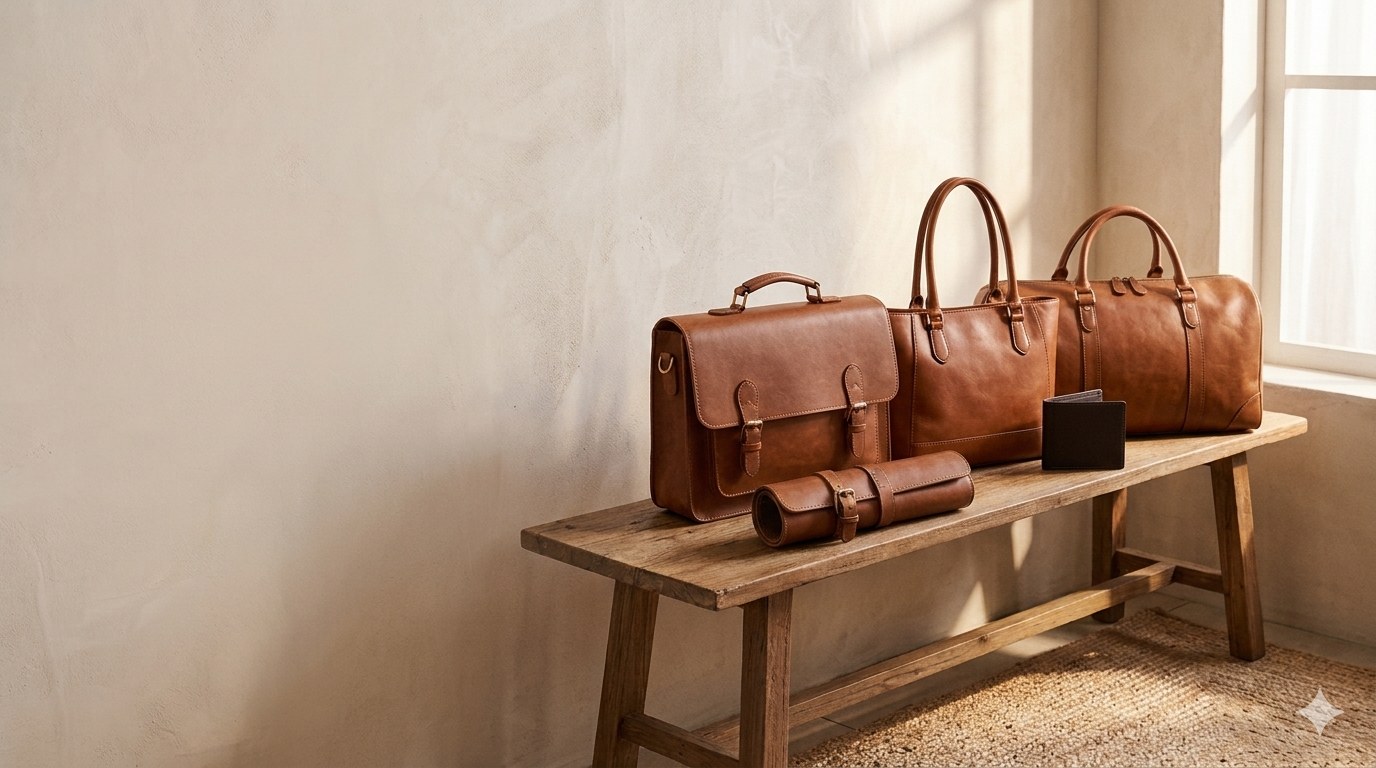
Leather is skin. It was designed to look after itself. Most of the damage we see comes from good intentions: too much oil, too much heat, too much water, and a cabinet full of products that promise to restore what was never lost.
What leather actually needs
Three things: a little moisture, protection from heat, and time to dry when it gets wet. That is the whole routine. A neutral conditioner once or twice a year is enough for a wallet or a belt. A bag carried every day may want it three times a year. More than that and the leather can become oversaturated, soft and shapeless.
If a product promises to restore, feed, protect, waterproof and shine in one step, be suspicious.
Water is not the enemy, heat is
Rain will not destroy a well-made leather piece. Drying it on a radiator will. Heat drives the natural oils out of the hide and leaves it brittle. If a piece gets wet, wipe off the surface, stuff it with newspaper to hold its shape and let it dry at room temperature, away from sunlight and heat.
Never use a hairdryer. Never put leather in a tumble dryer. Never leave it on a windowsill in direct sun for a day. The damage is slow and it does not reverse.
The routine
- Wipe with a soft, dry cloth after use. Remove dust before it works into the grain.
- Condition lightly once or twice a year with a neutral cream. A little goes a long way.
- Work the cream in with a soft brush or cloth, then buff off the excess.
- Let the piece rest for a few hours before using it again.
- Store bags stuffed and upright, in a dust bag, away from direct light.
- Keep belts rolled loosely, not folded, so the leather does not take a permanent crease.
What not to use
Household oil, olive oil, baby oil and leather "quick fixes" can darken the hide unevenly and attract dirt. Saddle soap is excellent for saddles and too harsh for a finished wallet. Alcohol and solvent cleaners strip the finish. If a stain needs a solvent, take it to someone who repairs leather for a living.
When to leave it alone
Patina is not dirt. The darkening at the edges and the sheen on a wallet are the record of use. Cleaning them away is not maintenance, it is erasure. A piece that looks lived-in is doing what it was made to do.
The best care routine is a small one, done consistently, with products you understand. Buy one neutral conditioner, one soft brush and one cloth. Use them less often than you think.
Full-grain pieces, cut and finished in small runs.