Walk through any leather shop and you will see the same words: genuine leather, real leather, top grain, full grain. Only one of them describes the part of the hide you are actually buying. The rest are marketing, and some of them are there to make a lower grade sound better than it is.
The hide has layers
A cowhide is not uniform. The top layer, where the hair grew, has the tightest fibre structure and the natural grain. Below it sits the split, a looser layer that is often sanded, coated and embossed to look like the top. Full-grain leather is the top layer, unchanged. The grain you see is the animal's skin, including its scars, veins and pores.
Corrected grain is the same top layer, sanded flat and then printed with a uniform pattern. It looks cleaner and more consistent, and it is weaker, because the sanding removes the strongest part of the surface. Bonded leather is not a hide at all. It is leather dust and fibres glued together and coated.
Full-grain is not a finish. It is a refusal to hide what the material actually is.
How to tell before you buy
- Look at the edge. A full-grain edge shows fibres and can be burnished. A corrected or bonded edge often looks painted or plastic.
- Look for variation. Real grain is not perfectly even. If every panel is identical, the surface has been printed.
- Press the surface. Full-grain creases like skin. Coated leather tends to crease in straight lines or not at all.
- Ask what the tannery calls it, not what the shop calls it. Full-grain, top-grain and corrected grain are the terms that matter.
- Check the price against the construction. Full-grain costs more because the hide yields less usable material.
Why it matters after a year
The difference is not visible on the shelf. It appears in use. Full-grain absorbs oil from your hands, takes the shape of what it carries and darkens unevenly. A corrected surface resists all of that, which is why it still looks new after a year, and why it still looks like a product rather than your product.
None of this makes corrected leather worthless. It has a place where uniformity and a low price matter more than longevity. The problem is paying full-grain prices for a corrected hide, or being told that "genuine leather" means the best grade. It does not. It means the material contains leather, and nothing more.
What we use, and why
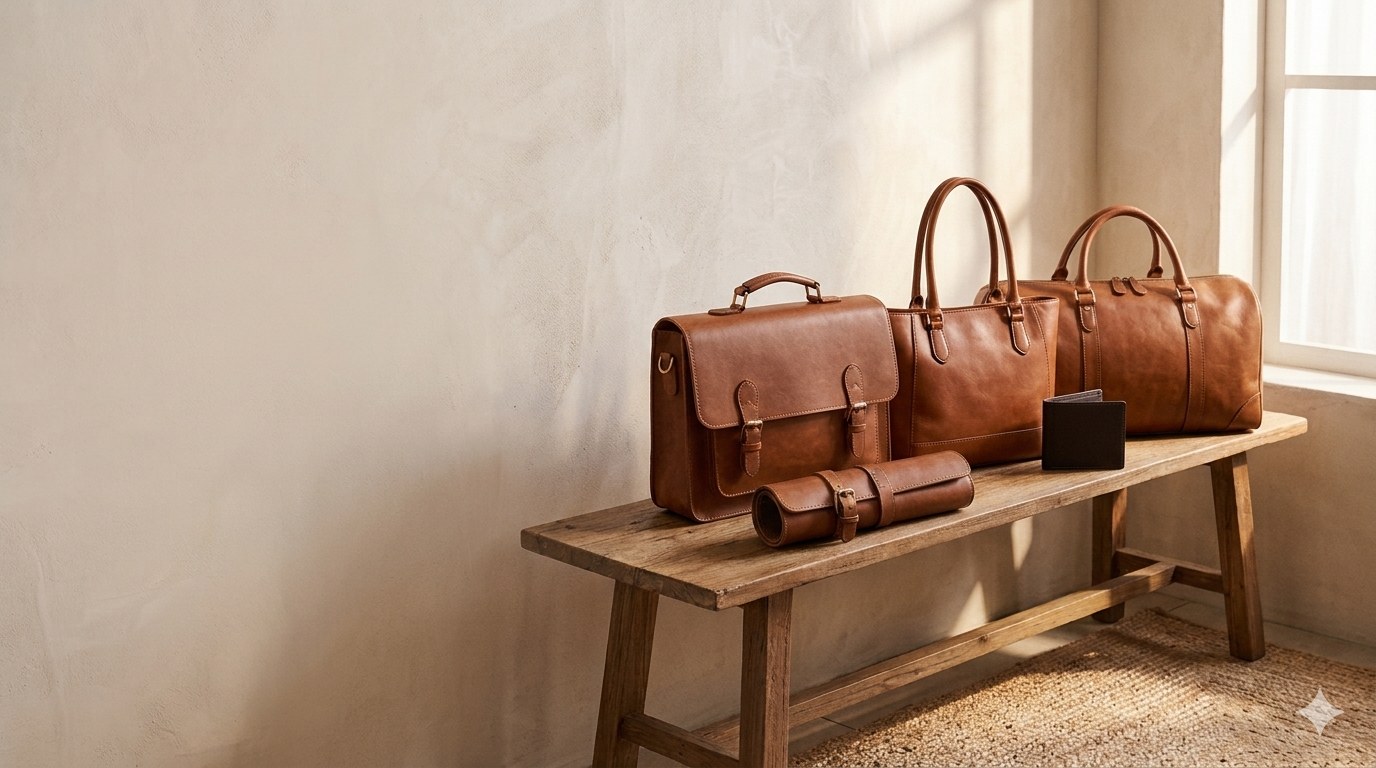
The pieces in this collection use full-grain cowhide and lambskin, finished with a light oil or wax rather than a heavy coating. The grain is left visible. The edges are burnished by hand, not painted. A piece will show marks, and those marks are the reason to choose it.
If you want a surface that never changes, leather is the wrong material. If you want something that records how it has been used, the grade on the label is the first thing to check.
Full-grain pieces, cut and finished in small runs.